
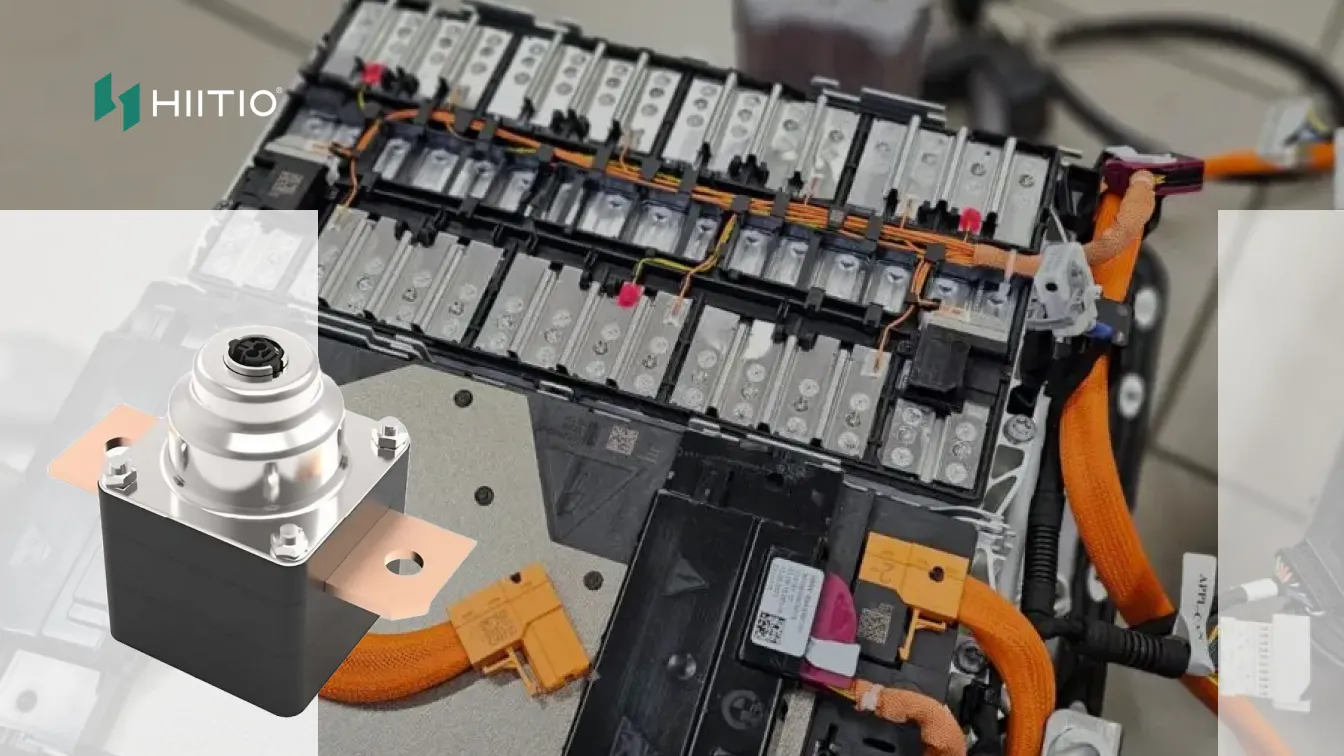
When a lithium-ion cell goes into thermal runaway, the clock that matters isn’t measured in minutes — it’s measured in milliseconds and microseconds. A crash-damaged battery pack, an internal short circuit, or an uncontrolled overcurrent event can push a cell past its critical temperature threshold in seconds, and once one cell fails, heat can begin transferring to its neighbors almost immediately. The question battery pack engineers keep coming back to is a practical one: when that moment arrives, what actually disconnects the circuit fast enough to matter — a contactor, or a pyro fuse?
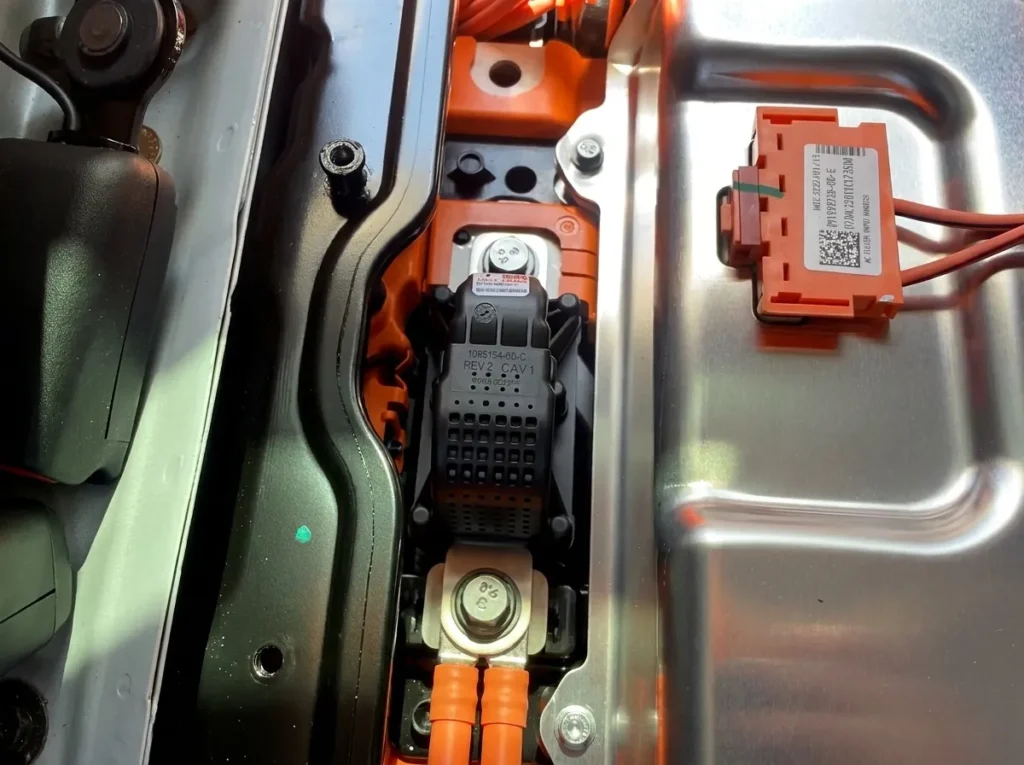
The honest answer is that it depends on what’s failing and how fast. This article breaks down how each technology actually performs, where the real performance gap lies, and why most well-engineered battery disconnect architectures don’t choose one over the other — they use both, in a coordinated protection scheme.
What Actually Happens During Thermal Runaway
Thermal runaway is a self-accelerating chain reaction: once a cell’s internal temperature crosses a critical threshold — commonly triggered by internal short circuit, mechanical damage, overcharge, or external heating — exothermic decomposition reactions inside the cell generate heat faster than it can dissipate, and temperature and pressure spiral upward until the cell vents, and often ignites. Independent thermal propagation research funded by the U.S. Department of Energy has recorded worst-case cell-to-cell propagation occurring in roughly two minutes under controlled test conditions, with results varying significantly by cell chemistry, format, and state of charge (NREL thermal runaway propagation study).
That propagation window is exactly why UL 9540A — the U.S. and Canadian national test method for evaluating thermal runaway fire propagation in battery energy storage systems — exists: it’s the standard the industry uses to characterize how a given battery design behaves once thermal runaway starts, and what protection and spacing requirements follow from that behavior (UL Solutions — UL 9540A test method).
The practical implication for pack designers: the electrical protection system’s job isn’t to stop thermal runaway once it’s fully underway — that’s a thermal and mechanical containment problem. Its job is to remove electrical energy from the fault as fast as possible, before an electrical fault (a crash-induced short, an internal cell fault, or a sustained overcurrent event) has a chance to add fuel to a developing thermal event. That’s where disconnect speed becomes the entire conversation.
How a Contactor Responds
A DC contactor is an electromechanical switch: an energized coil pulls a moving contact against a fixed contact to close the circuit, or releases it to open the circuit. It’s the workhorse of battery pack isolation — used for main pack disconnection, pre-charge sequencing, and manual service disconnects across nearly every EV and ESS platform on the market.
Contactors are fast by mechanical standards, but they are still mechanical. Opening the circuit requires physically separating two contacts and quenching the resulting DC arc, a process that takes single-digit to tens of milliseconds depending on design and load. HIITIO’s ceramic high-voltage DC contactor family, for example, is generally specified at 20A to 1,000A / up to 1,500VDC, with select higher-current models (such as the HCF1200A and HCF1200B series) rated to 1,200A and up to 2,500VDC — covering the full range from small auxiliary circuits to full battery pack main-line disconnection. But like any mechanical contactor, its response time is governed by contact travel and arc-extinguishing physics, not by how quickly the trigger signal arrives.
That’s a meaningful limitation in a fast-developing electrical fault. A contactor is excellent at controlled, commanded disconnection — pack isolation during charging, service disconnects, BMS-commanded shutdown on a detected overvoltage or overtemperature trend — but it isn’t designed to be the last line of defense against a violent, fast-developing short circuit.
How a Pyro Fuse Responds
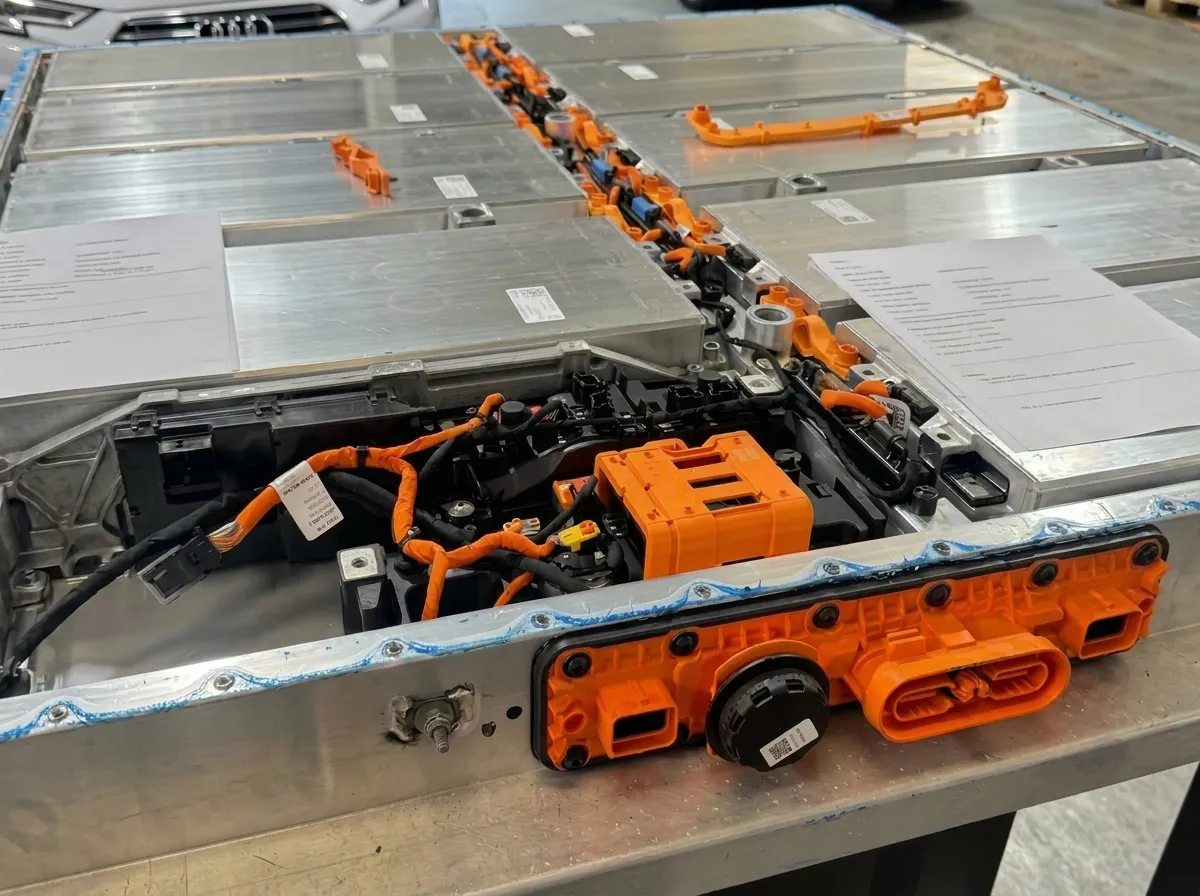
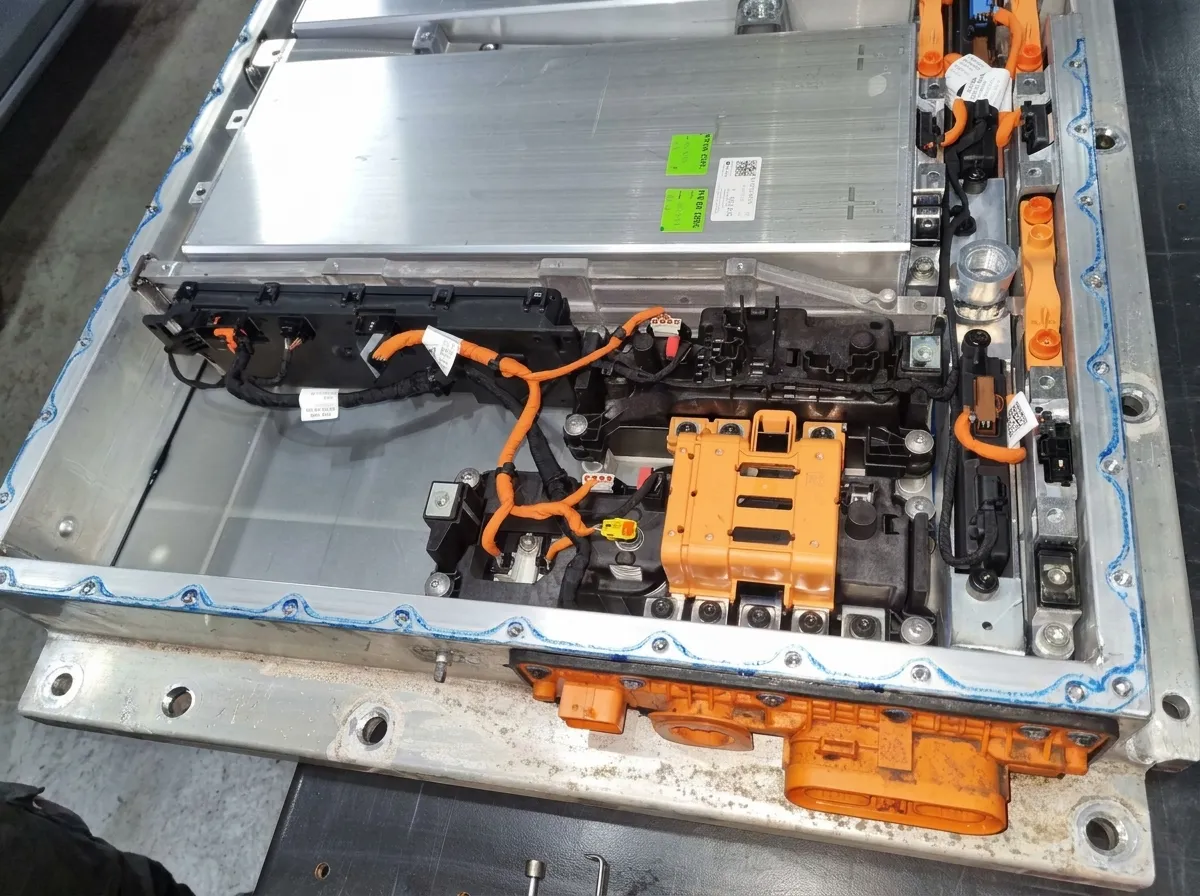
A pyro fuse — also called a pyrotechnic fuse or pyro safety switch — takes a fundamentally different approach. Instead of physically pulling contacts apart, it uses a small pyrotechnic charge, triggered by an electrical signal, to sever a busbar or conductor in one irreversible action. There’s no arc to quench because there’s no gradual contact separation — the conductor is physically destroyed.
The trigger sequence typically runs in four steps: a fault detection signal originates from the Battery Management System, an Airbag Control Unit, or a manual emergency trigger; a low-voltage pulse (commonly 3–12V, lasting around 2ms) is sent to the pyro fuse’s igniter; the igniter heats and detonates the built-in gas generator; and the resulting shockwave severs the fusible element, interrupting the high-voltage circuit.
HIITIO’s own pyro fuse platform — including its 1000Vdc 400A model — is rated for breaking metrics of 1000V/15,000A/15µH and 800V/20,000A/13µH (voltage / current / test-circuit inductance, per HIITIO’s published specification). Because the disconnection happens by physically severing the conductor rather than by mechanically separating and quenching an arc, the process avoids the contact-travel and arc-extinguishing time that limits contactor speed. In automotive collision scenarios, this is what allows a pyro fuse to be fired in tandem with airbag deployment, cutting high-voltage power within roughly 2 milliseconds of a detected crash signal — a figure HIITIO publishes specifically for frontal-collision response.
That speed advantage comes with real trade-offs. A pyro fuse is a one-time, non-resettable device — once triggered, the pack section it protects is permanently disconnected, and the component must be replaced before the circuit can be restored. It’s also a dedicated safety device rather than a general-purpose switch: it isn’t used for routine on/off cycling, pre-charge sequencing, or day-to-day pack isolation, since its intended purpose is a single, decisive disconnection under fault or crash conditions.
| Attribute | Contactor | Pyro Fuse |
|---|---|---|
| Disconnection method | Mechanical contact separation | Pyrotechnic severing of conductor |
| Typical response time | Single-digit to tens of milliseconds (mechanical contact travel + arc quenching) | No mechanical arc-quenching stage; HIITIO’s automotive crash-response figure is ~2ms from crash signal to disconnection |
| Reusability | Fully resettable, rated for repeated cycling | Single-use; requires replacement after activation |
| Typical trigger source | BMS command, control circuit, manual switch | BMS fault signal, airbag/crash sensor, manual emergency trigger |
| Best-fit role | Routine pack isolation, pre-charge, service disconnect | Crash response, catastrophic internal short, last-resort emergency cutoff |
| HIITIO reference range | 20A–1,000A / 1,500V typical; select models to 1,200A / 2,500V | 1000V/15,000A/15µH and 800V/20,000A/13µH breaking metrics (per HIITIO spec) |

They’re Not Actually Competing Technologies
Framed as “pyro fuse vs. contactor,” it’s tempting to treat this as a choice between two rival components. In practice, well-designed battery pack protection architectures rarely choose one over the other — they layer them, each covering the failure modes the other isn’t built for.
A typical high-voltage EV or ESS battery pack protection scheme looks something like this:
- Main and pre-charge contactors handle every routine connection and disconnection event — powering up the drivetrain, initiating charging, executing a controlled BMS-commanded shutdown when a slower-developing fault (gradual overtemperature, cell imbalance, insulation degradation) is detected.
- Semiconductor or traditional fuses provide passive backup protection against sustained overcurrent, sized and coordinated with the contactor’s interrupting rating.
- A pyro fuse sits as the fast-acting, crash- and catastrophic-fault-triggered layer — the device that fires when speed is the only thing that matters, whether that’s a collision, a violent internal short, or a scenario judged severe enough for emergency responders to trigger a manual cutoff during a rescue.
| Trigger Scenario | Primary Response Device | Why |
|---|---|---|
| Routine charge/discharge cycling, service disconnect | Contactor | Resettable, rated for repeated cycling, no destructive action needed |
| Gradual overtemperature or cell-imbalance trend detected by BMS | Contactor (BMS-commanded) | Controlled shutdown; system can be restored after inspection |
| Sustained overcurrent / short circuit within rated interrupting capacity | Fuse (semiconductor or pyro) | Passive or fast-triggered backup protection, coordinated with contactor rating |
| Vehicle collision detected by airbag control unit | Pyro Fuse | Fired in tandem with airbag deployment; ~2ms from crash signal to disconnection |
| Catastrophic internal short or rapid thermal event | Pyro Fuse | Speed is the only variable that matters; contactor response time is too slow |
Selection Guidance for Engineers
A few practical points worth weighing when specifying disconnect hardware for a battery pack protection architecture:
Start from the failure mode, not the component. A gradual, BMS-detected trend (rising cell temperature over minutes, a slowly developing insulation fault) is well within a contactor’s response window and doesn’t justify the cost or single-use nature of a pyro fuse. A collision or a violent internal short, on the other hand, needs the fastest disconnection the protection architecture can provide — and that’s a job the pyrotechnic device, not the mechanical contactor, is built to do.
Coordinate ratings across the full protection chain. A pyro fuse’s breaking capacity, a contactor’s interrupting rating, and any backup fuse’s let-through energy all need to be sized together against the pack’s actual short-circuit current — not selected independently and assumed to work as a system. This is especially important as pack voltages climb toward 800V and beyond, where fault energy scales significantly.
Budget for pyro fuse replacement after any activation event. Because the device is destructive by design, every triggered pyro fuse needs to be replaced — and inspected alongside the rest of the high-voltage system — before the vehicle or ESS unit returns to service. This should be built into service procedures and spare-parts planning from the start, not treated as an afterthought.
Where HIITIO Fits in This Protection Chain
HIITIO manufactures both sides of this comparison. Our high-voltage DC contactor lineup covers ceramic and epoxy-sealed designs generally specified at 20A to 1,000A / 1,500VDC, with higher-current variants rated to 1,200A and 2,500VDC, purpose-built for main-line, pre-charge, and service-disconnect duty across EV, ESS, and solar applications.
On the fast-response side, our pyro fuse platform delivers published breaking metrics of 1000V/15,000A/15µH and 800V/20,000A/13µH, with an intelligent, adjustable triggering strategy that can be tuned to the application’s crash-sensor or BMS fault-detection logic, and a published crash-response time of roughly 2ms from signal to disconnection. For pack-level architectures that need contactors, fuses, and sensing coordinated as a single engineered unit rather than sourced and wired separately, our solid-state iBDU solution and custom PDU capability bring both technologies together under one design.

We don’t position either device as the universal answer — the right protection architecture almost always uses both, matched to the failure modes each is actually built to handle.
FAQ: Pyro Fuse vs. Contactor for Thermal Runaway Protection
Can a pyro fuse replace the main contactor in a battery pack?
No. A pyro fuse is a single-use, destructive safety device intended for crash or catastrophic-fault response, not routine switching. Main and pre-charge contactors remain the correct choice for everyday pack connection and disconnection.
How fast is a pyro fuse compared to a contactor, in real terms?
A contactor typically interrupts current in single-digit to tens of milliseconds because it has to physically separate contacts and quench a DC arc. A pyro fuse skips that mechanical stage entirely — it severs the conductor with a pyrotechnic charge instead. HIITIO publishes a specific figure for automotive crash response: high-voltage power cut within roughly 2 milliseconds of a detected collision signal, fired in tandem with airbag deployment.
What actually triggers a pyro fuse in an EV?
Three main sources: the Battery Management System, which detects electrical anomalies such as overcurrent or internal short circuits; the Airbag Control Unit, which fires the pyro fuse simultaneously with airbag deployment during a collision; and a manual trigger, which lets first responders disconnect high-voltage power during a rescue.
Does a pyro fuse need to be replaced after every activation?
Yes. The device works by physically severing a conductor with a pyrotechnic charge, so it cannot be reset. Any activation — whether from a real fault or a test event — requires a replacement unit before the circuit can be restored.
Is a pyro fuse only used in electric vehicles?
No. While EVs are the largest application, pyro fuses are increasingly specified in stationary energy storage systems for fast circuit isolation during short-circuit or overcurrent events, and in industrial automation and robotics settings where precise, externally triggered circuit interruption is required.
Ready to Design a Faster, Layered Battery Protection System?
Whether you’re specifying main-line contactors for routine pack switching or a pyro fuse for crash-response and catastrophic-fault protection, HIITIO can help you match disconnect hardware to your actual failure modes. Our engineering team supports coordinated protection design across contactors, semiconductor fuses, and pyro fuses — up to 1,500VDC and beyond — for EV, ESS, and solar battery pack applications, with samples typically available within 2–4 weeks. If your next battery platform needs a protection architecture engineered rather than assembled, talk to HIITIO’s team today.


